
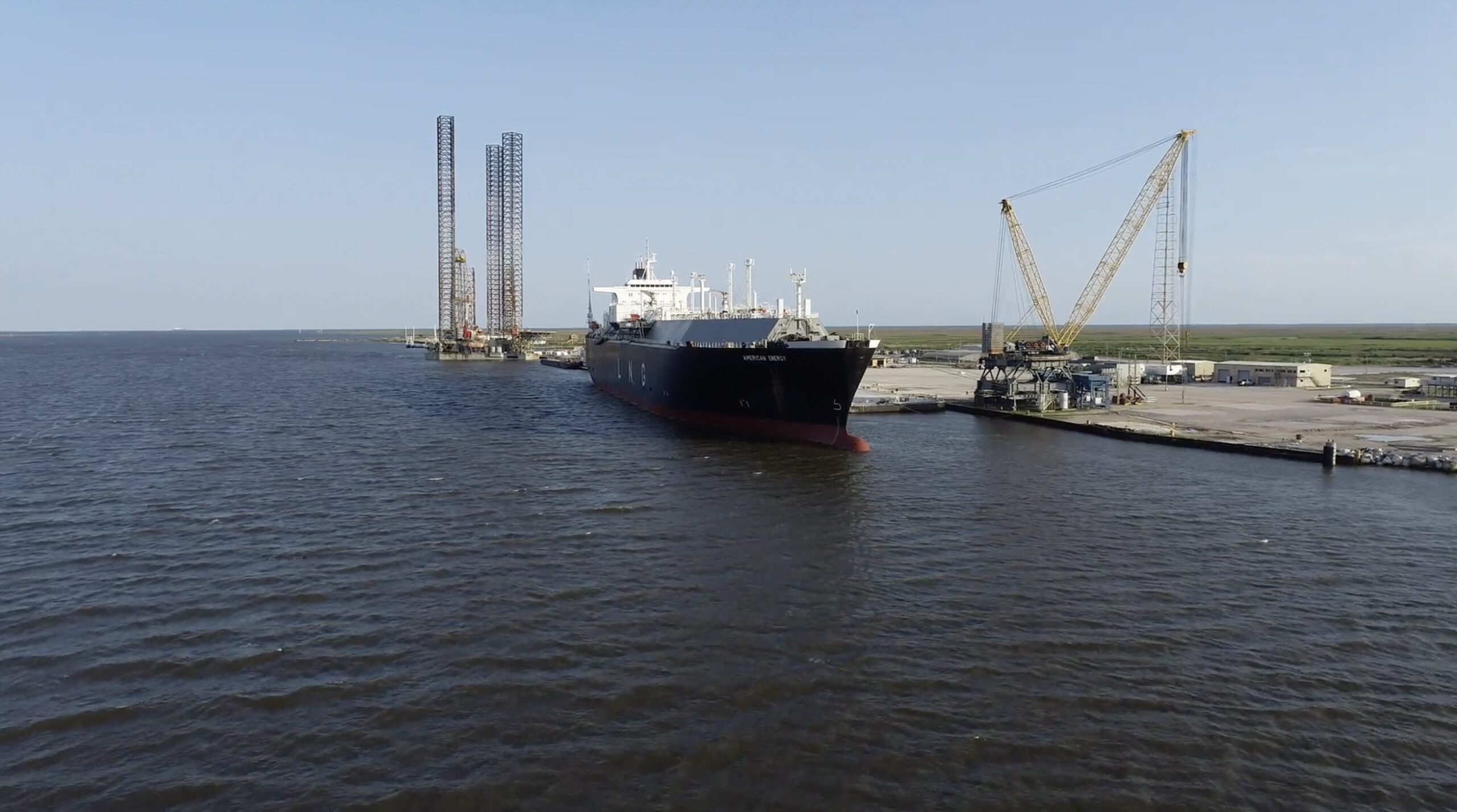
Every time a new LNG train comes online on the Gulf Coast, the headlines focus on the terminal. More capacity, more export volume, another milestone for the project team.
What doesn’t make the headline is everything that has to work around that terminal for the volume to actually move.
More trains means more vessels calling. More vessels calling means tighter turnaround windows. Tighter turnaround windows mean less room for error on the marine support, the barge coordination, and the laydown yard space that keeps materials staged and ready when a vessel is at berth. None of that is optional. It’s the difference between a terminal that hits its numbers and one that doesn’t.
We’re watching this play out in real time along the Sabine Pass corridor. Each phase of buildout adds volume that has to move through the same finite stretch of waterway, the same limited yard space, the same window of tide and traffic. The companies that plan for that now — before the next train is online, not after — are the ones that keep their projects moving when things get tight.
What that actually requires:
Site access that’s secured before it’s urgent. Laydown yard space near the water doesn’t appear when you need it. It has to be lined up ahead of the volume, not scrambled for once a vessel schedule tightens.
Vessel, barge, and truck coordination that works as one system, not three separate calls. The projects that run smoothly are the ones where marine, ground, and yard logistics are coordinated by one operator who understands how they depend on each other — not three vendors hoping their timing lines up.
Capacity built for complexity, not simplicity. High-volume, high-complexity project logistics take a different kind of operational planning than a standard shipment. That’s the work worth having a real conversation about before the next phase breaks ground.
This is the environment Port City operates in every day — supporting the operators, EPCs, and logistics teams who are moving real volume through Sabine Pass, not managing one-off shipments. If your team is planning around the next phase of Gulf Coast LNG buildout and wants to talk through what the logistics side actually requires, that’s a conversation we’re glad to have.
If you’re mapping out logistics for an upcoming phase, let’s talk before the schedule gets tight. Contact us today.